
Any constitutional amendment alters the wording of the North Carolina State Constitution, and is added to a ballot if 60% of all members in both the NC House of Reps and the NC Senate approve the amendment during a single legislative session.
Three amendments have been approved to be on the November ballot this year. If approved by the public (voted in), they’ll take effect on January 1, 2027. They are:
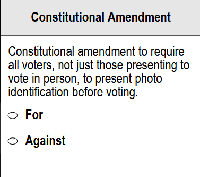
This will require mail-in voters to present photo IDs. Currently, there is an exception process for those voting absentee-by-mail. This amendment would make those requirements more stringent. The ID amendment will likely create more barriers for voters in the military, student voters, and rural voters.
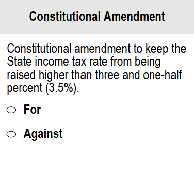
Currently the state income tax for North Carolina is capped at 7% because of a constitutional amendment that was approved by voters in 2018. Before that it was 10 percent. While this sounds like an easy amendment to agree with, be aware that there’s something bigger going on than simply tax relief for voters. This amendment was proposed by state Republican leaders, and it will not only cap income tax for individuals but for corporations as well.
When corporations no longer have to pay income tax, much of the money the state needs for education (k-12 schools, community colleges and the university system), health and human services (health programs, mental & behavioral health programming), public safety (law enforcement and the judicial system) and transportation and infrastructure (operations, economic development, and job growth) disappears with those tax breaks. Already, the richest North Carolinians pay the lowest share of their income in state and local taxes.
The reason these leaders are trying to get this into the ballot now is because if they lose majority power in the state legislature, it will be harder for future voters and leaders to sustain the needs of the state such as teacher raises, heath care, disaster recovery, and child care.
All of this coming at a time when Oxfam recently (September 7, 2026) published its Best States to Work in the U.S. 2026 with North Carolina ranking dead last overall, and ranking 51 (out of 52) in policy, 52 in worker protections, and 47 in rights to organize. According to NC Budget & Tax Center, this amendment will not make NC more affordable, but rather would “lock in tax breaks for the wealthy few and profitable corporations,” weakening our state’s long-term economic future.
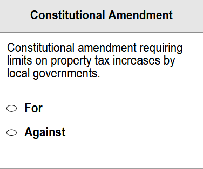
Again, this is another amendment that sounds like it’d simply be tax relief to the individual. However, what it will actually do is take power away from local governments and give it to the state legislature. The state general assembly (the NC House of Reps and NC Senate) would restrict county governments on what property taxes they are allowed to take and therefore how they are used. What this likely means is decreases in services your local government can offer its county. For more, see our video on Instagram.